
The whole vault
Every chart explains one mechanism. Start with what's going on, or search the full text.
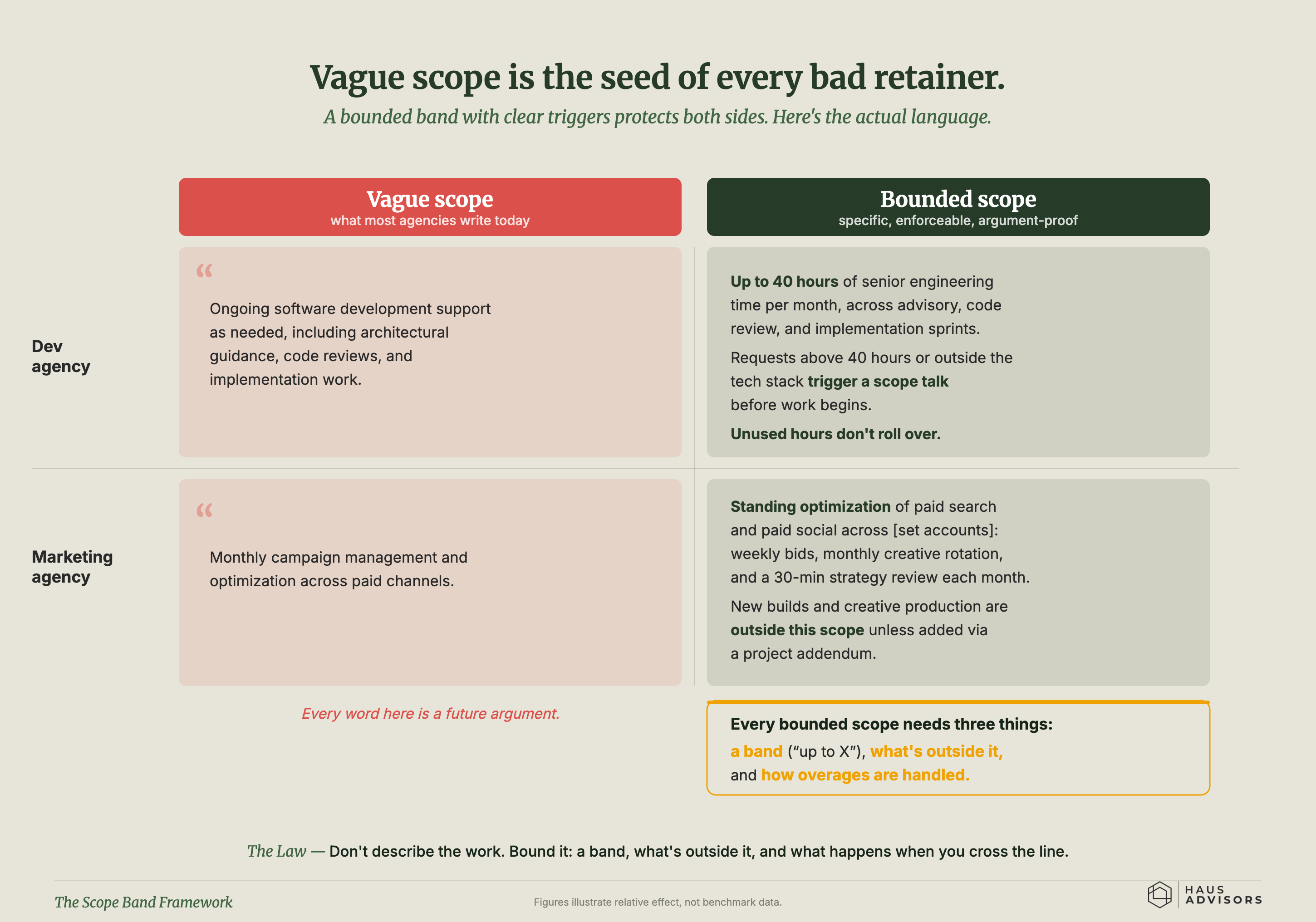
The Scope Band Framework
Fuzzy scope wording is the seed of every retainer that goes bad; a bounded band with clear triggers protects both sides.
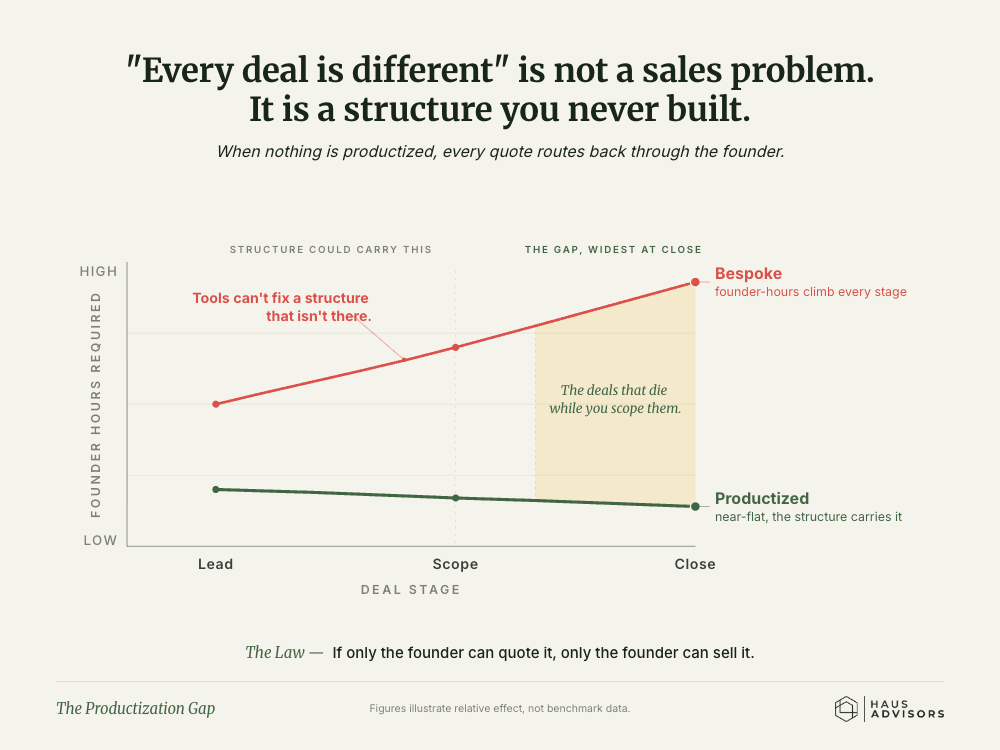
The Productization Gap
When nothing is packaged, every deal routes back through the founder, and the closer you get to a yes the more founder time it eats.
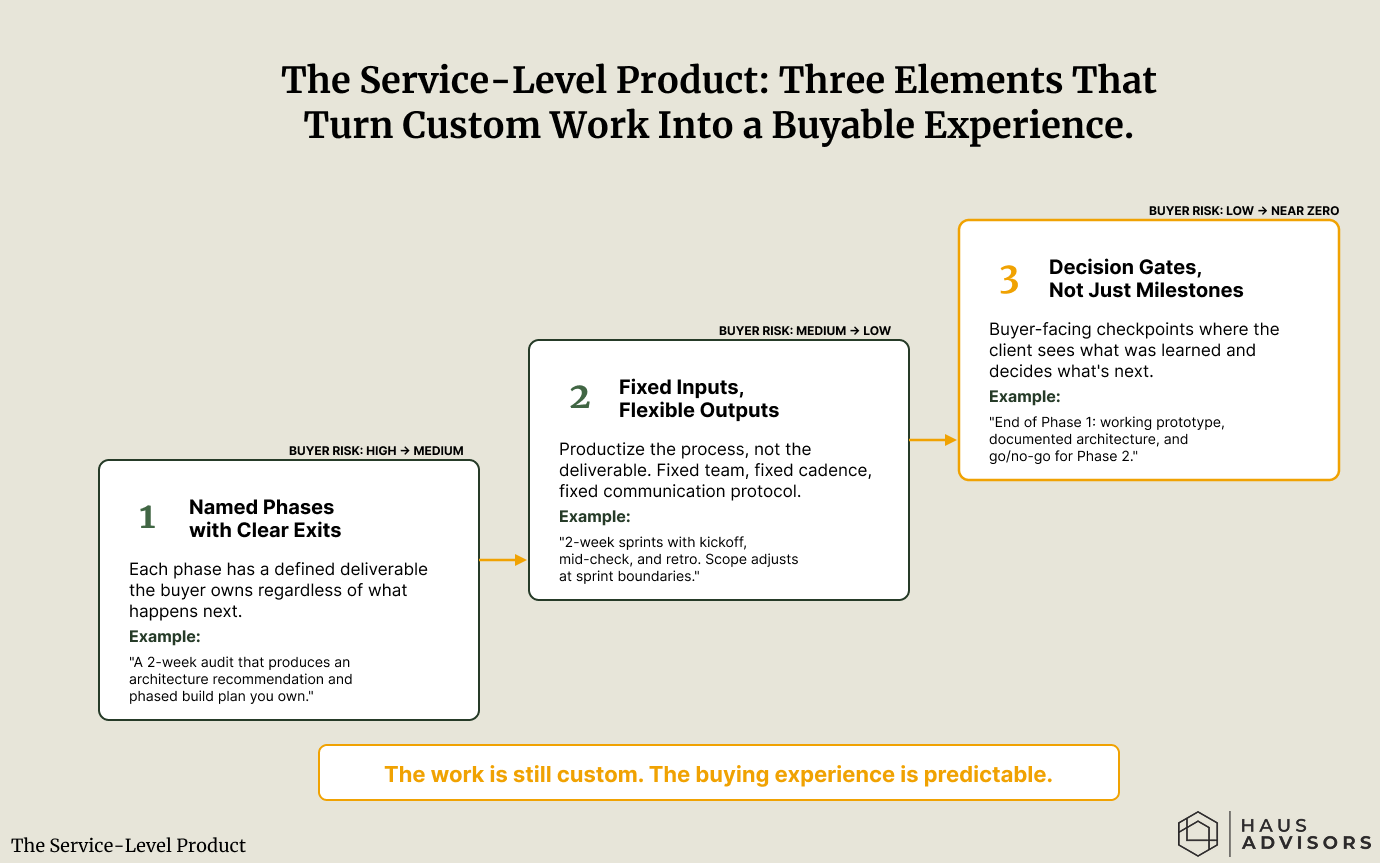
The Service-Level Product
You can keep the work custom and still make buying it feel simple and safe.
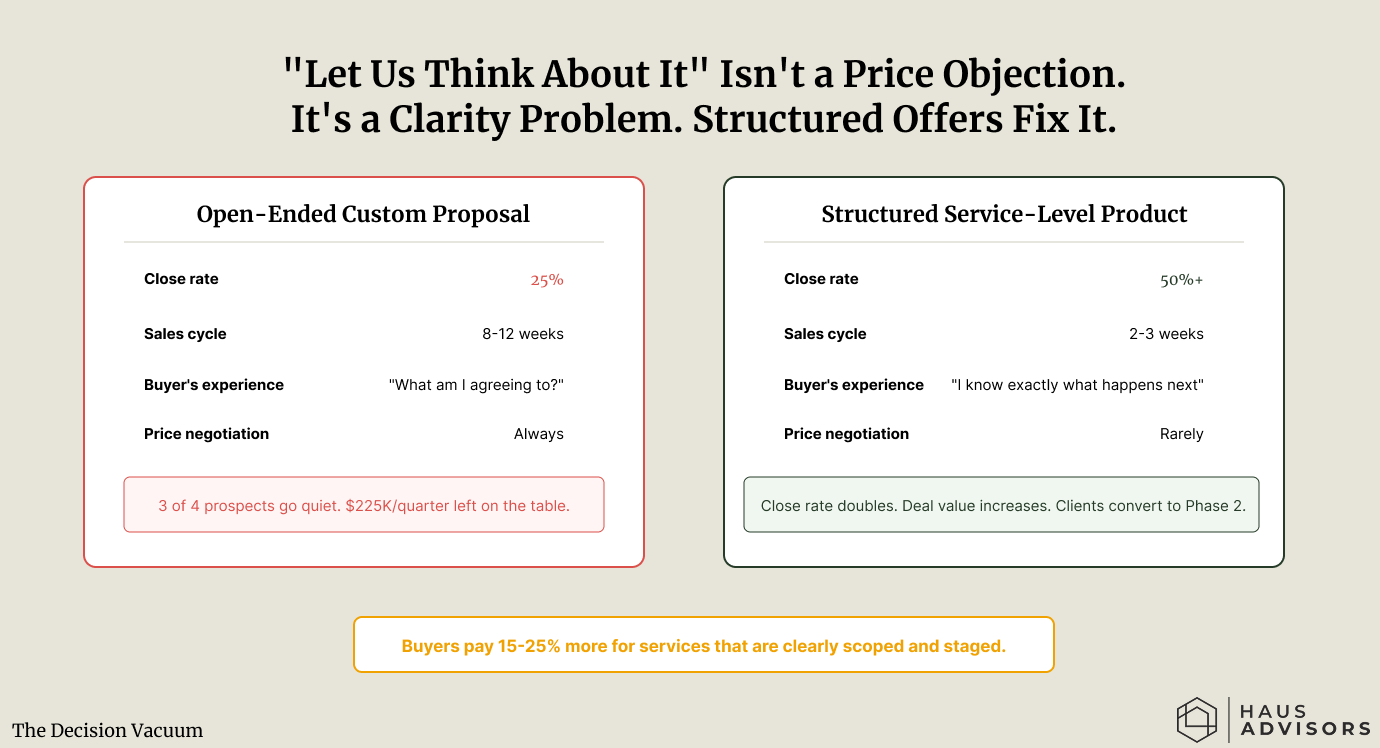
The Decision Vacuum
When a prospect says let us think about it, the problem is usually unclear scope, not price, and a structured offer fixes it.
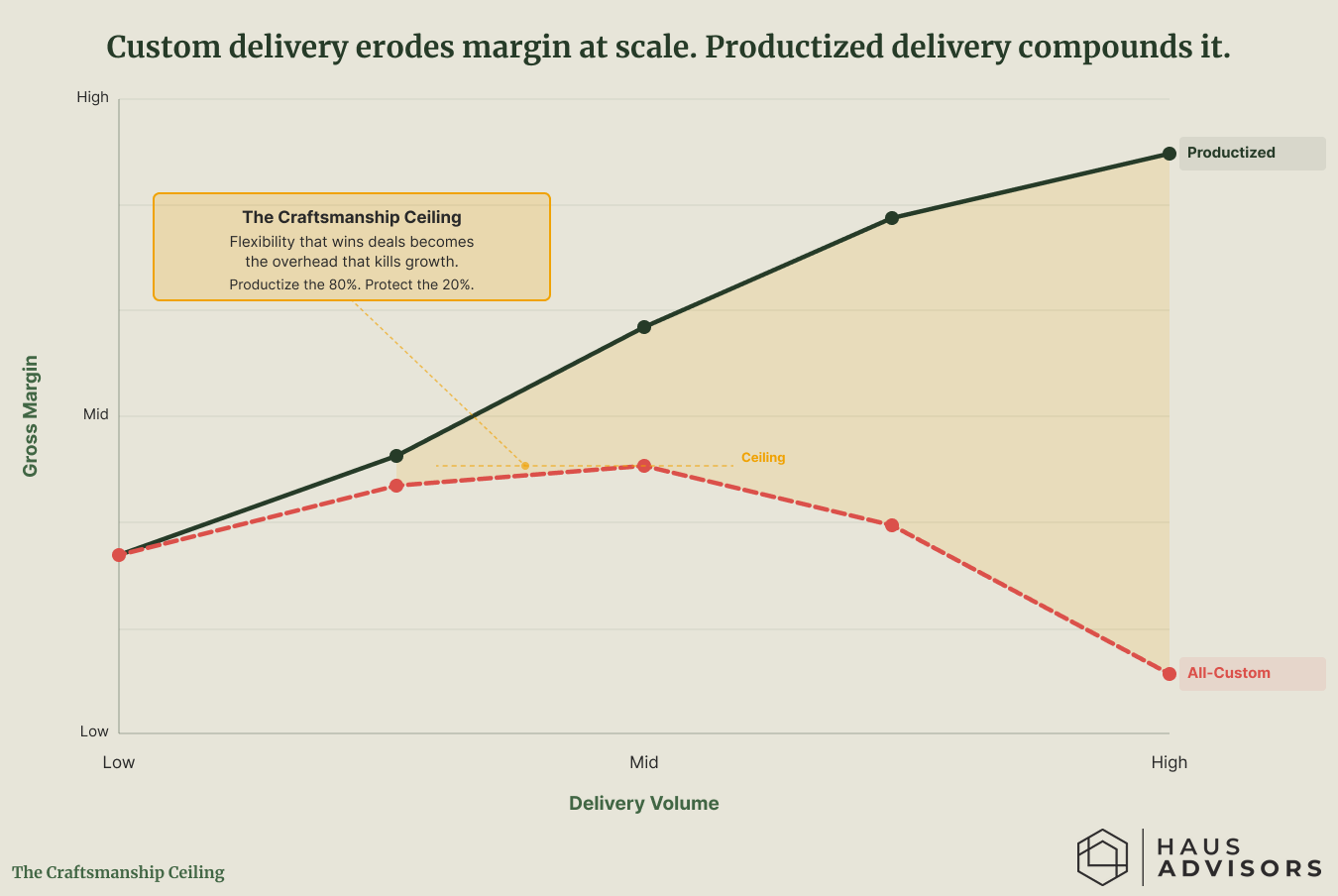
The Craftsmanship Ceiling
Doing every project fully custom caps your profit as you grow, while packaging most of the work lets profit keep climbing.
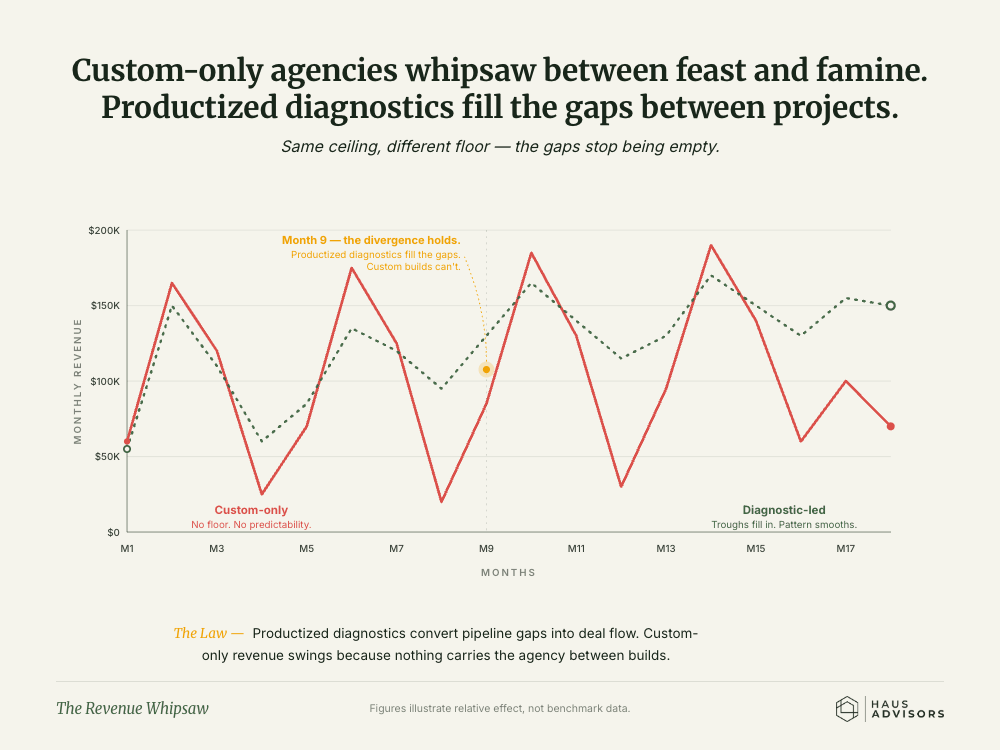
The Revenue Whipsaw
Agencies that only sell custom projects swing between packed and empty months, while a repeatable diagnostic offer fills the gaps between builds.
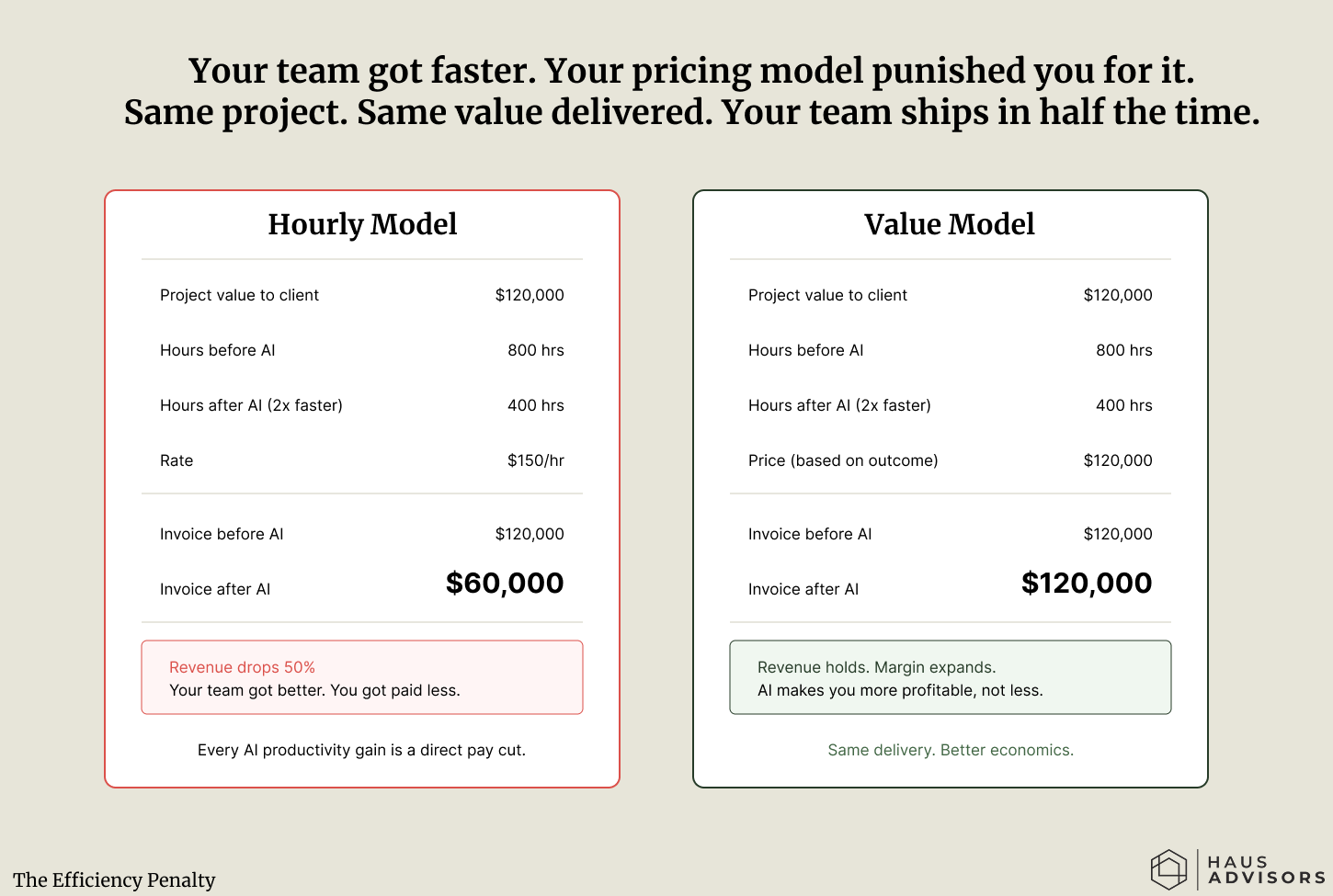
The Efficiency Penalty
When your team gets twice as fast, billing by the hour quietly cuts your pay in half, while pricing on the result doesn't.
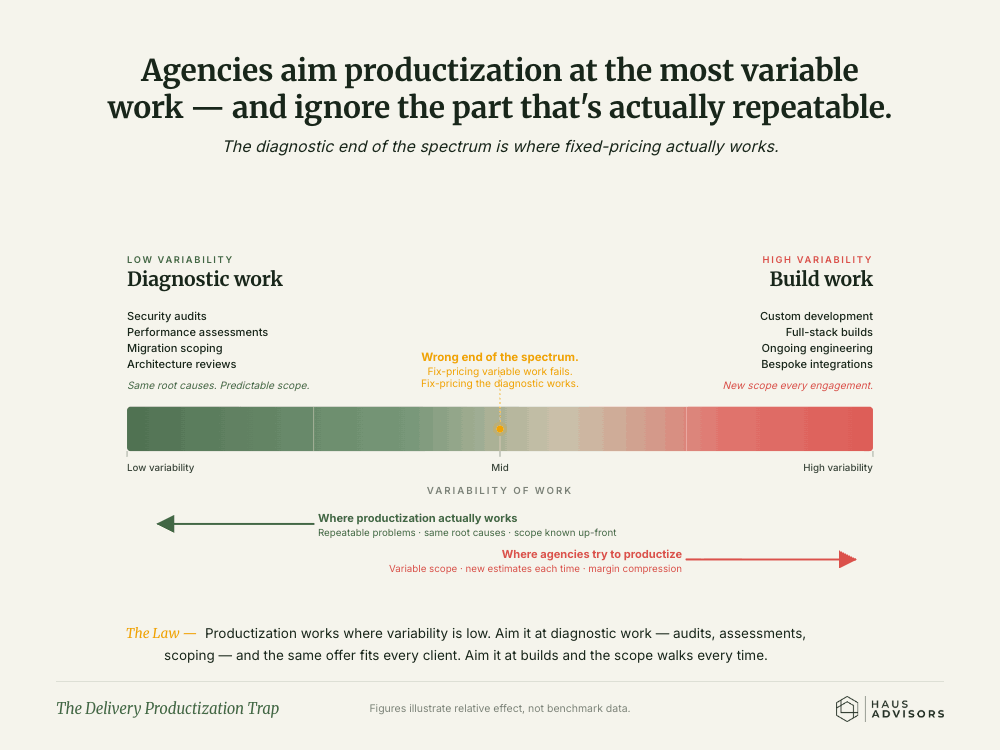
The Delivery Productization Trap
Fixed-price packages work for the predictable, repeatable part of your work, not for the custom builds where the job changes every time.
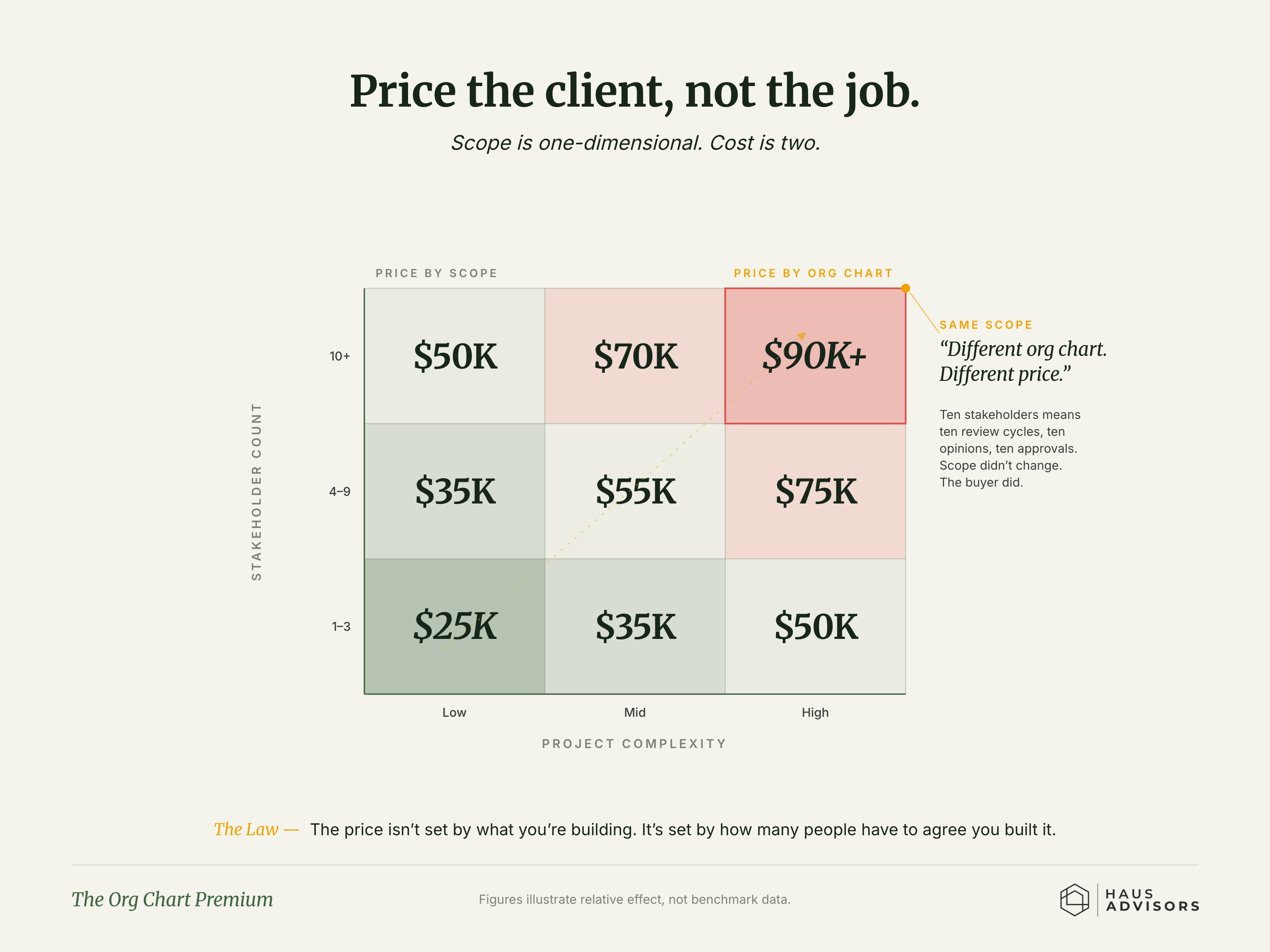
The Org Chart Premium
Your price isn't really set by the size of the job; it's set by how many people on the client's side have to agree you did it.
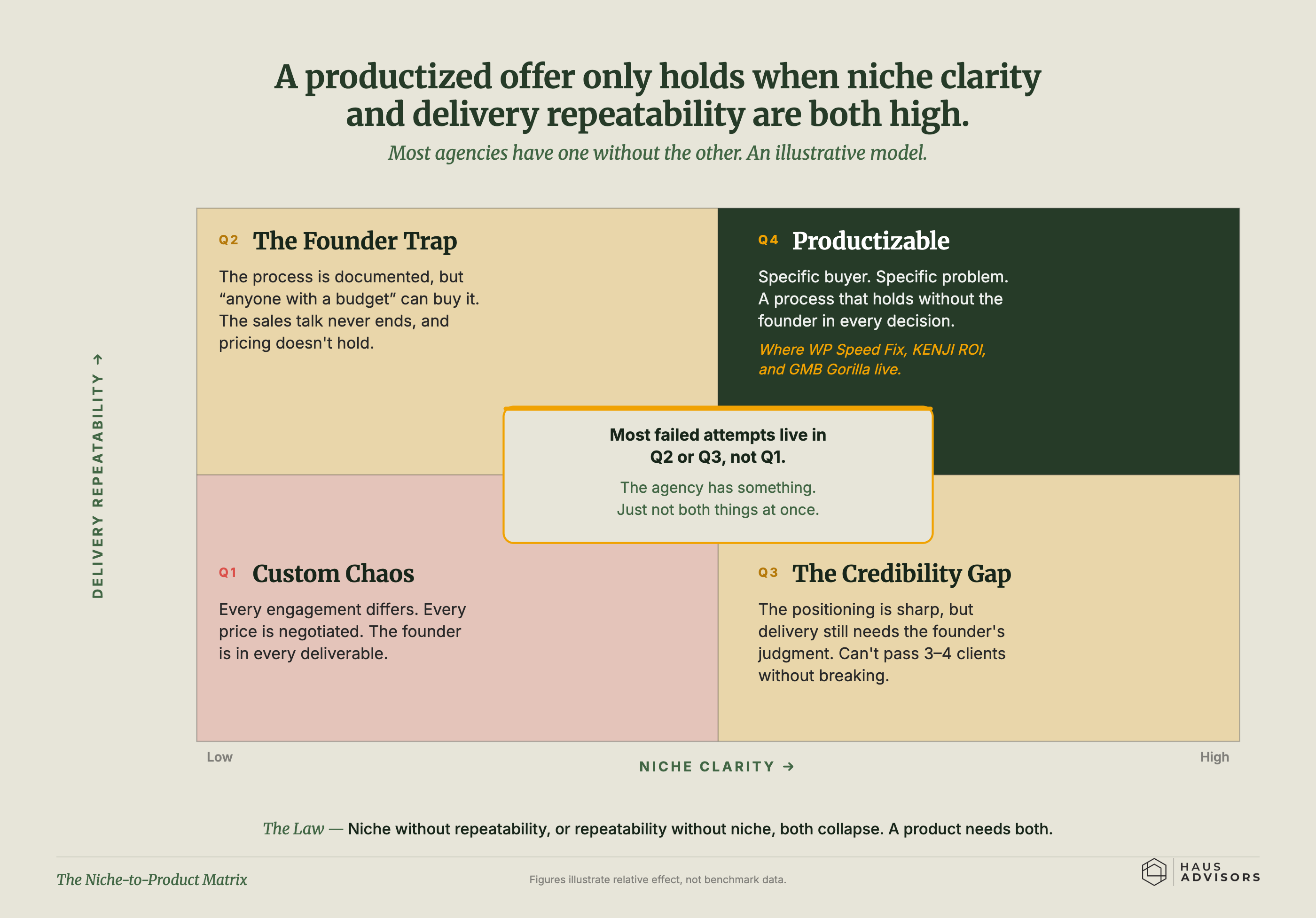
The Niche-to-Product Matrix
A packaged offer only holds when you're clear about who it's for and your delivery repeats without the founder; most agencies have one but not both.
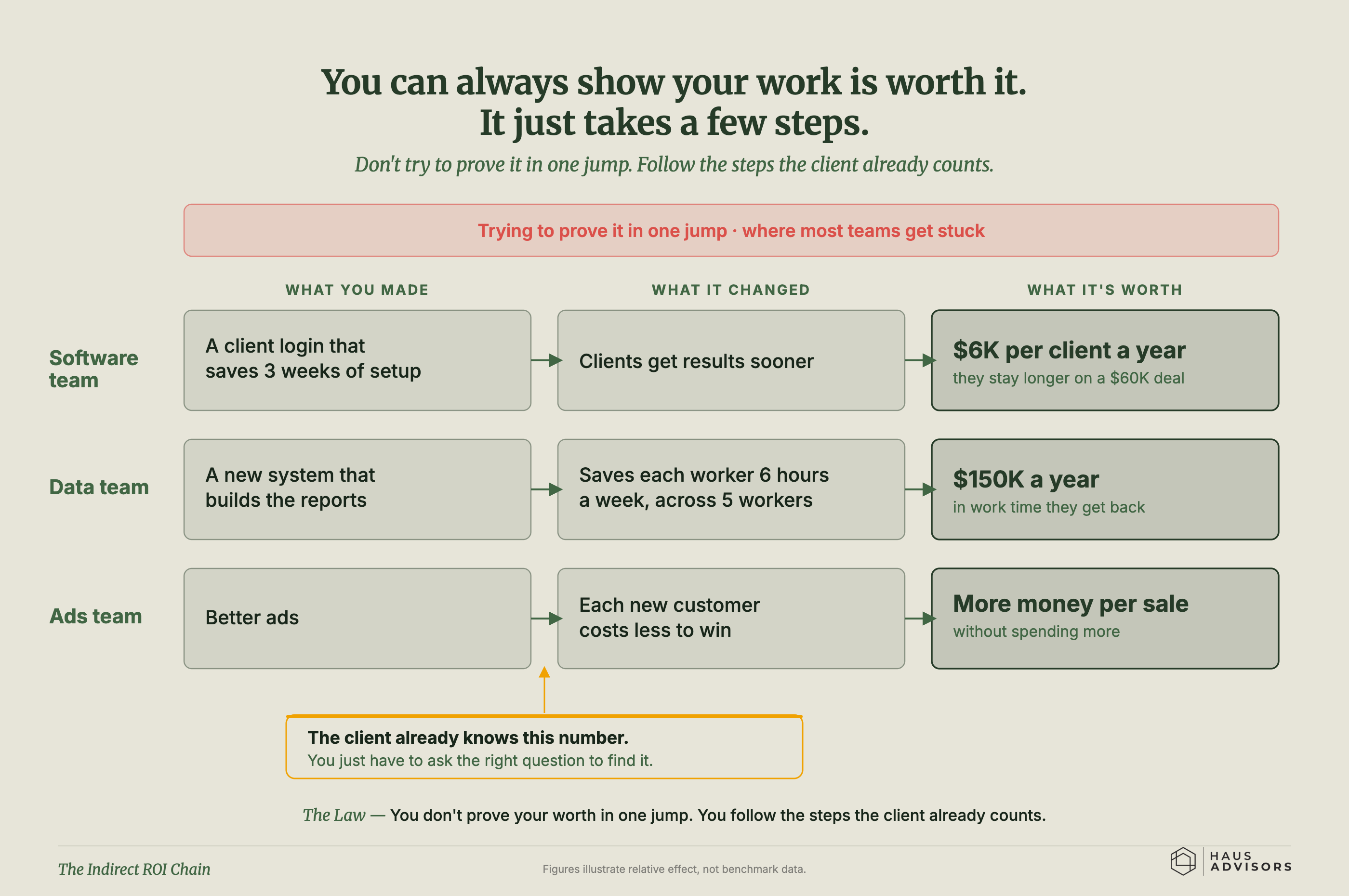
The Indirect ROI Chain
You can always show your work is worth the money by walking the small steps from what you made to what it changed to what it's worth, instead of proving it in one leap.
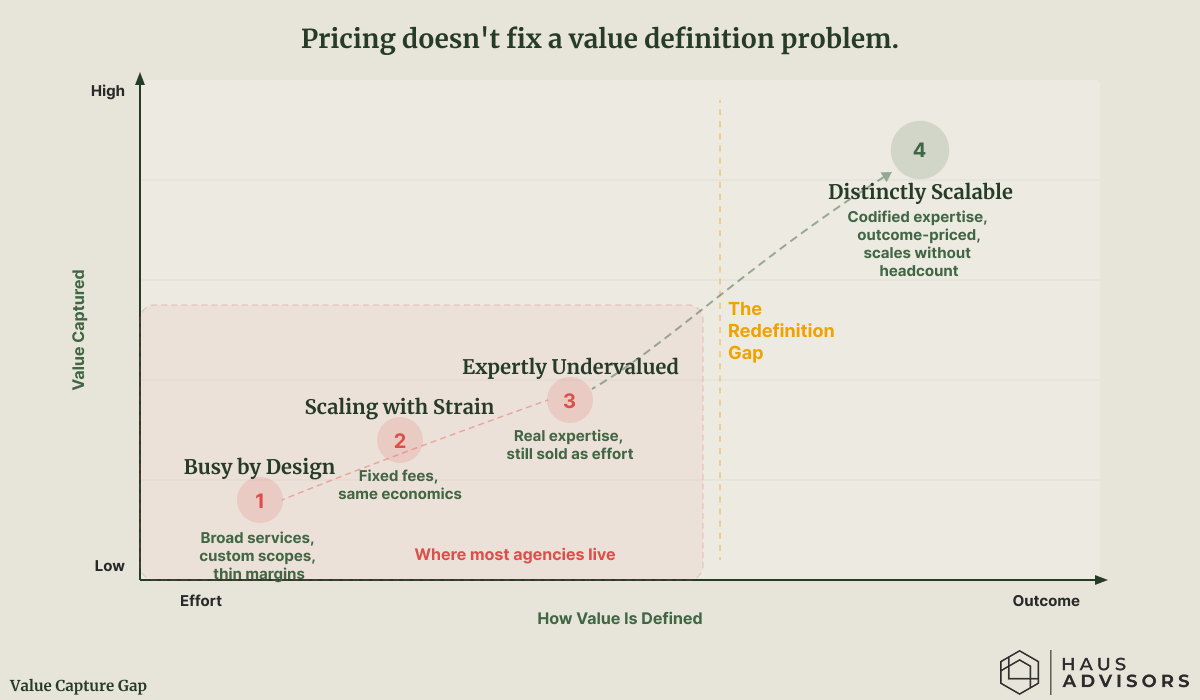
Value Capture Gap
How much money you keep depends on whether you sell effort or outcomes, and no price change fixes an offer still defined by effort.